
Lucknowi Chikankari: Stitches, Fabrics and How to Tell Hand from Machine
21 Sep 2026 · Everything In Chikankari
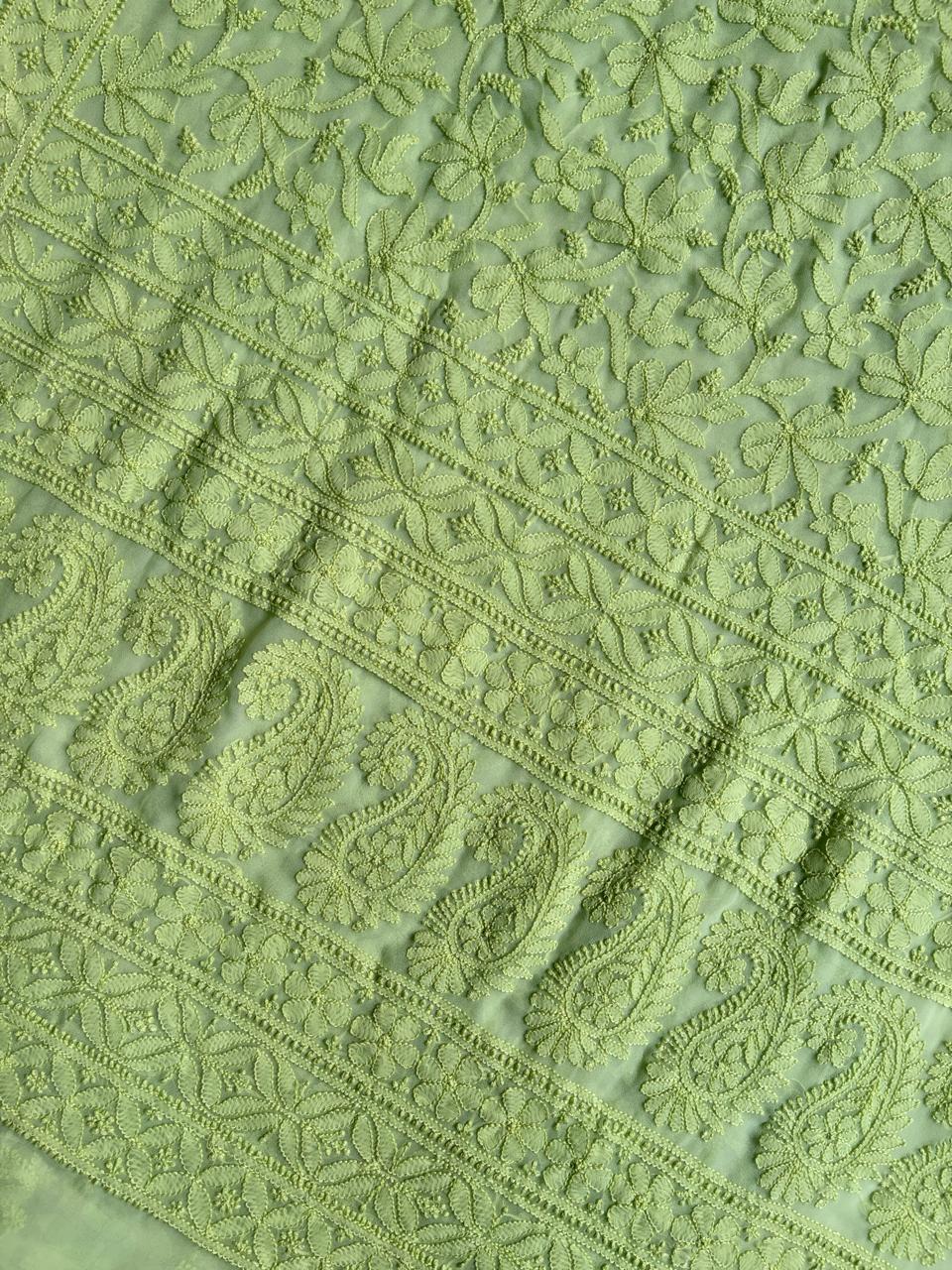
Lucknowi chikankari is a hand embroidery tradition from Lucknow, Uttar Pradesh, worked in fine thread on fabrics like mulmul, cotton, georgette and chiffon. Lucknow Chikan Craft received Geographical Indication (GI) recognition in 2008. This guide covers how chikankari is made, its core stitches, the best fabrics, how to tell hand embroidery from machine work, and how to care for it.
What is Chikankari?
Chikankari is delicate, mostly white-thread embroidery known for floral motifs, fine shadow work and net-like openwork. Classic pieces are white on white. Today it also comes in coloured fabrics and threads, from soft pastels to deep wine and navy.
Popular accounts link its origins to the Mughal court, and Lucknow became its centre during the Nawabi period.
How a chikankari piece is made
- Fabric: chosen, cut and prepared for embroidery.
- Design: motifs such as butis, butas, vines, paisleys and borders are planned.
- Chappai: the design is block-printed onto the fabric with a temporary, washable dye that guides the artisan.
- Embroidery: every stitch is done by hand, and one piece can use several different stitches.
- Washing: the temporary print is washed out, leaving only the embroidery.
- Finishing: the piece is checked, pressed and finished.
The six core chikankari stitches
| Stitch | What it does |
|---|---|
| Bakhiya | Shadow work, stitched on the reverse so it shows as a soft shadow on the front |
| Tepchi | Long, fine stitch for outlines and detail lines |
| Murri | Tiny raised stitch, often the centre of a flower |
| Phanda | Small knot-like stitch that adds texture to motifs |
| Jaali | Net-like openwork made by working the fabric threads apart |
| Hool | Small eyelet-like opening worked into the fabric |
Best fabrics for chikankari
| Fabric | Feel | Best for |
|---|---|---|
| Mulmul | Soft, very light | Hot weather, everyday wear |
| Cotton | Breathable, sturdy | Daily and office wear |
| Chanderi | Refined, light sheen | Festive kurtas and sarees |
| Georgette | Flowing, light | Dupattas, anarkalis |
| Chiffon | Sheer, airy | Suit sets, sarees |
| Crepe | Fluid drape with a slightly textured surface | Festive and occasion sets |
| Rayon | Smooth, soft, easy drape | Everyday kurta and pant sets |
| Modal | Soft, fluid drape | Modern silhouettes |
Hand chikankari vs machine embroidery: how to tell
Machine embroidery is also sold under the "chikan" label, so check before you pay.
- Check the reverse. Hand embroidery shows thread carried across the back with tucked-in ends, and bakhiya leaves a criss-cross of thread. Machine work shows a uniform stitch line with a second thread underneath.
- Look for tiny variation. Hand stitches differ slightly in length and spacing. Machine stitches are identical.
- Inspect the jaali. Hand jaali is made by working the threads apart, so the openings look soft. Cut or punched holes look sharp.
- Match the price to the labour. Dense hand embroidery takes days of work. A heavily worked kurta priced at a few hundred rupees is machine work.
- Ask the seller directly whether the embroidery is done by hand and where it is made.
Why hand chikankari costs what it does
Cost follows labour. The denser the embroidery, the more days an artisan spends on a single piece, and fabric quality and finishing add to it. That is why a fully hand-embroidered piece cannot be priced like a machine-made one.
How to care for chikankari
- Follow the garment's care label first.
- Hand wash in cold water with a mild detergent.
- Do not scrub the embroidery or wring the fabric.
- Dry in shade, not in direct sun.
- Iron on the reverse at the temperature the fabric allows.
- Store folded in a clean, dry place.
How to style chikankari
For everyday wear, pair a cotton kurta with straight pants or jeans. For work, choose subtle embroidery with tailored trousers. For festivals, add a dupatta and traditional jewellery. Fusion pieces like shirts and dresses work with modern accessories.
Frequently asked questions
Is chikankari handmade?
Traditional chikankari is hand embroidered, but machine work is also sold under the same name. Check the reverse side.
Is chikankari only white?
No. White on white is the classic, but it is now made in many colours.
Which chikankari fabric is best for summer?
Mulmul and cotton are the most breathable.
What is the difference between a buti and a buta?
A buti is a small repeated motif. A buta is a larger, prominent one.
Shop chikankari from Lucknow
- Short Chikankari Kurtis
- Long Chikankari Kurtas
- Chikankari Suit Sets
- Chikankari Palazzo & Pants
- Unstitched Chikankari Suitpieces
- Chikankari Sarees
Written by Muskaan Chhablani, founder of Everything In Chikankari, based in Lucknow. Read our story.
