Unstitched Mul Chanderi Chikankari Kurta Dupatta Set: The Complete Guide to Fabric, Cutdana Work & Motifs
23 Jul 2026 · Everything In Chikankari
If you've been scrolling through unstitched chikankari sets and landed on the term "mul chanderi," you've probably also run into "mulmul," "cotton chanderi," and half a dozen fabric names that all sound similar but behave very differently once stitched. This guide breaks down exactly what you're buying — the fabric, the cutdana work, the motifs — so you know what to expect before you order.
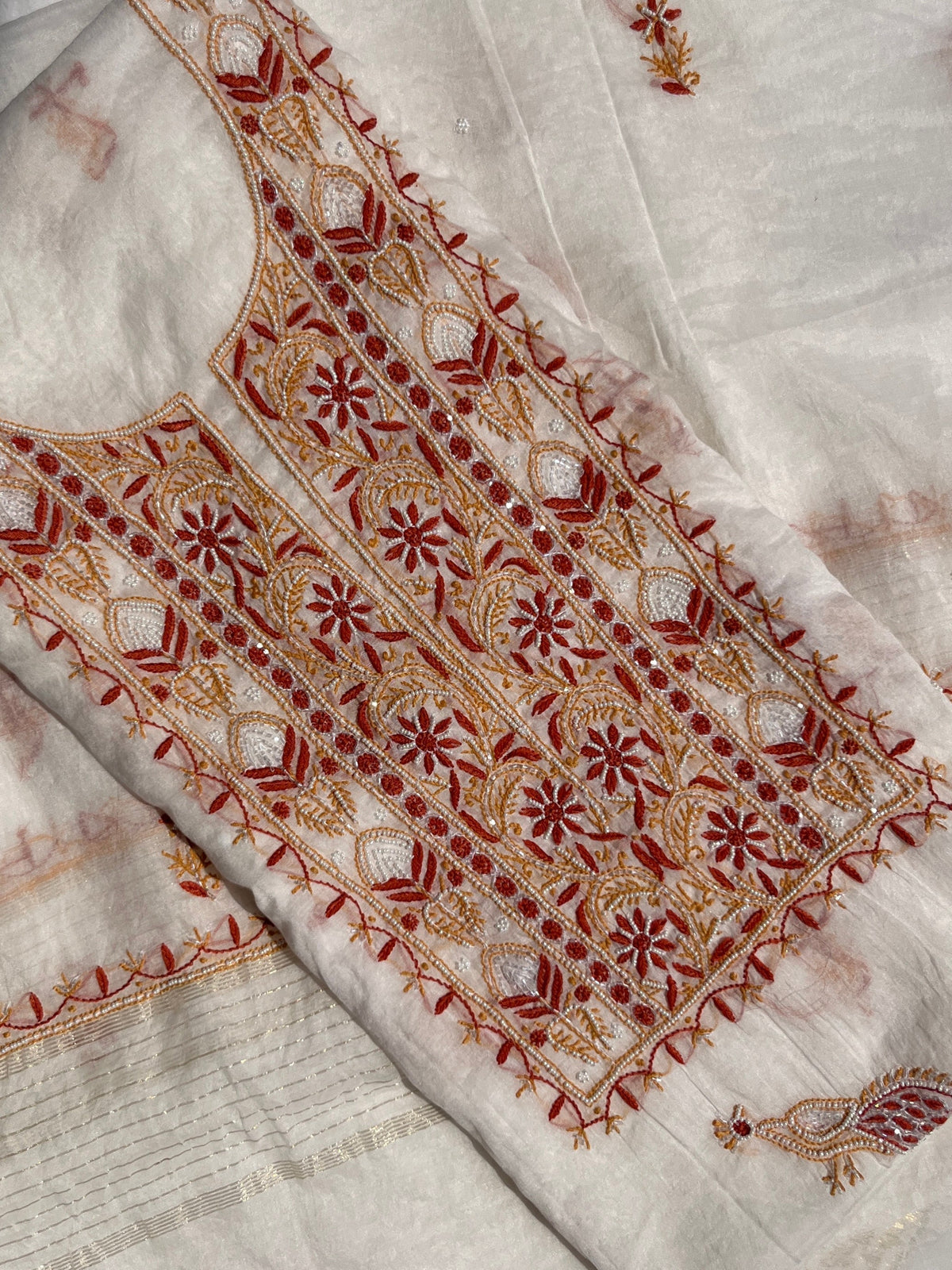
Flat lay of unstitched mul chanderi kurta dupatta set with visible chikankari and cutdana work.What Is Mul Chanderi Fabric?Mul chanderi is not a single fabric — it's mul cotton (the same soft, breathable weave used in mulmul) combined with the fine handwoven texture of Chanderi. The result carries mulmul's lightness and breathability, but with a subtle sheen and slightly better structure than plain mulmul, which tends to be sheerer and softer with almost no shine.
Here's the quick distinction people usually search for:
- Mulmul (mul cotton): ultra-light, matte, most breathable, wrinkles easily, most casual of the three
- Mul Chanderi: mulmul's softness with a gentle sheen, holds embroidery detail slightly better than plain mulmul, dressier without being heavy
- Cotton Chanderi: more structured and crisp, less sheen, best for pieces where you want the embroidery to read sharp rather than soft
For chikankari specifically, mul chanderi is a strong middle ground — it drapes easily like mulmul but the faint sheen makes white-on-white and pastel chikan work catch the light better, so the embroidery is more visible in photos and in person.
What Does "Unstitched" in Mul Chanderi Chikankari Kurta Dupatta Set Actually Mean?
An unstitched set means you receive the kurta fabric and dupatta fabric as uncut, unstitched lengths — not a ready-to-wear garment. You take it to a tailor of your choice and get it stitched to your own measurements and preferred silhouette. We don't offer in-house stitching, so the fit and final shape is entirely in your hands (or your tailor's).
This is the same reason unstitched suits are popular across Indian ethnic wear generally: standard sizing rarely fits every body the same way, and unstitched fabric lets you choose the exact silhouette — straight kurta, flared, or fitted — rather than settling for what's on the rack.
If you'd rather not start from scratch, we also stock A-line Anarkali sets in the same chikankari and cutdana work. These are semi-stitched — the sides still need to be closed by a tailor to your fit, but there's less tailoring work involved than a fully unstitched set.
Cutdana Work: Why It Costs More Artistry Than Plain Chikankari
Cutdana refers to small faceted glass beads hand-embroidered onto the fabric, typically along the neckline, sleeves, or as accents within the chikan motif itself. Unlike thread-only chikankari, cutdana work requires the artisan to place and secure each bead individually, aligning it with the embroidery pattern so it catches light without disrupting the delicacy of the thread work underneath.
This adds hours of additional handwork per piece. A plain chikankari kurta might take a set number of hours to embroider; add cutdana, and you're looking at significantly more time, because bead placement can't be rushed the way thread stitches sometimes can — misaligned beads are immediately visible and can't be easily corrected without unpicking the surrounding threadwork.
The payoff is visual: cutdana adds a subtle shimmer to chikankari that pure white-on-white thread work doesn't have, which is part of why cutdana-detailed pieces read as more festive and work well for parties, not just daytime wear.
Motifs: Florals, Peacocks, Seahorses & Fish
Most chikankari you'll find online sticks to florals and paisleys. Our motifs go beyond that — each piece is worked in a specific motif with its own character:
- Florals — the most traditional chikankari motif, versatile for both daily wear and festive occasions
- Peacocks — associated with grace and celebration, usually worked with more elaborate neckwork given the motif's natural detail
- Seahorses and fish — uncommon in chikankari, these motifs bring a distinctive, less-seen silhouette to the embroidery, often positioned as a focal point on the yoke or neckline rather than repeated all over
The motif placement matters as much as the motif itself — a peacock or fish worked into the neckwork draws the eye upward and tends to look more intentional than an all-over repeat pattern, especially on unstitched fabric where you're deciding the final neckline shape with your tailor.
Chikankari motifs seahorse neckWhy Mul Chanderi Works for Summer and PartiesTwo things make mul chanderi versatile enough to wear both ways:
For summer/daytime: the mul cotton base keeps it breathable and light against the skin — comparable to mulmul, so it doesn't trap heat the way georgette or heavier chanderi silk can.
For parties/evening: the fabric's natural sheen plus cutdana beadwork gives it enough shimmer to hold its own at a wedding function or evening event, without needing heavy embellishment layered on top.
This dual usability is the main reason mul chanderi has become a preferred base fabric for chikankari over plain cotton — you're not choosing between comfort and occasion-appropriateness, you get both from one fabric.
Caring for Cutdana Chikankari
Because cutdana involves glass beadwork alongside thread embroidery, care needs a bit more attention than plain chikankari:
- Hand wash in cold water with a mild detergent; avoid soaking for long periods, which can loosen bead threads
- Dry clean is the safest and best option if the piece has heavy cutdana concentration, particularly around the neckline
- Iron on the reverse side, away from bead placement, to avoid flattening or dislodging beads
- Store folded rather than hung, to prevent beadwork from pulling at the fabric over time
Choosing Your Set
If you're deciding between motifs and fabrics, here's a simple way to think about it: pick mul chanderi for breathability with a bit of festive sheen, choose your motif based on the occasion (florals for everyday, peacock or fish/seahorse for something more distinctive), and factor in cutdana if you want visible shimmer rather than pure thread-only subtlety.
Is mul chanderi good for summer? Yes — the mul cotton base keeps it breathable and lightweight, comparable to mulmul, while the Chanderi sheen adds a festive edge without added weight.
Do you offer stitching for unstitched sets? No, we sell the fabric unstitched so you can get it tailored to your own measurements. We also carry semi-stitched A-line Anarkali sets, where the sides still need closing by a tailor but the tailoring work involved is less than with a fully unstitched set.
What is cutdana work in chikankari? Cutdana is hand-embroidered faceted glass beadwork added alongside chikan thread embroidery, typically at the neckline or sleeves, adding shimmer and requiring significantly more artisan hours than thread work alone.
How do I wash a chikankari set with cutdana? Hand wash in cold water with mild detergent, or best recommendation is dry clean for pieces with heavy beadwork. Iron on the reverse side away from the beads.
